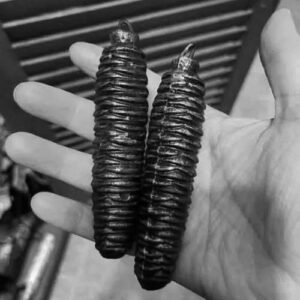
At first glance, they don’t look like anything particularly meaningful—just small, oddly shaped metal fittings with a simple, utilitarian design. Found together in a bucket in an old attic, they could easily be mistaken for leftover plumbing parts, forgotten pieces of hardware, or even components from an obsolete mechanical device. Their worn appearance only makes the mystery more intriguing.
For someone discovering them decades later, it can be surprisingly difficult to figure out what these little metal objects were originally designed to do. Older homes often contain forgotten tools and hardware that once served very specific purposes but gradually disappeared as newer technology and modern household products replaced them.
What makes these pieces particularly interesting is that they are actually something much more specific than ordinary scrap metal. Their shape, construction, and unusual design can provide clues about the period in which they were used and the everyday tasks they were created to perform. Objects like these are reminders of how many practical tools once existed that are rarely seen in modern homes.
Finding a collection of unfamiliar hardware in an old attic can therefore feel like discovering a small piece of everyday history. What initially appears to be a bucket of random metal pieces may actually tell a story about the way people worked, repaired, built, or maintained their homes in another era. Sometimes the most ordinary-looking objects turn out to have the most fascinating history